
Last Updated on September 30, 2026
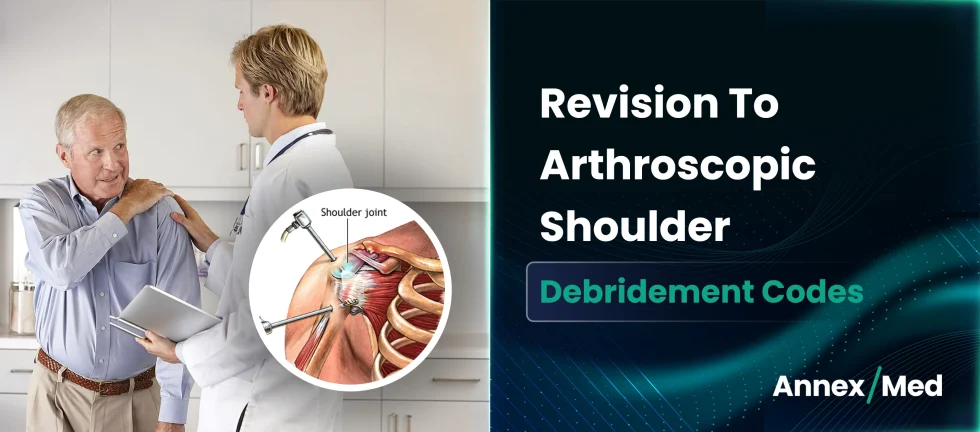
Arthroscopic shoulder debridement is one of the most commonly performed shoulder procedures in orthopedic surgery and one of the most frequently miscoded. The distinction between CPT 29822 and 29823 comes down to a single variable: the number of discrete structures debrided. Get the count wrong or document it vaguely, and the claim either underbills the complexity or generates a denial for insufficient documentation.
The AMA revised the descriptors for both codes in 2021 to add structure-specific clarity. In 2026, payer scrutiny has intensified, with commercial payers and Medicare Advantage plans requesting operative reports at higher rates and denying claims where the documented structure count does not align with the billed code.
This guide covers the revised CPT 29822 and 29823 descriptors, NCCI bundling rules, documentation requirements, common denial triggers, and 2026 payer updates billing teams need to act on now.
Looking for a Billing Partner That Understands Orthopedic Coding Complexity?
AnnexMed delivers specialized orthopedic coding and denial prevention support for complex arthroscopy claims.
Explore Our Orthopedic Billing SolutionsTable of contents
What Changed: The 2021 Revision and Why It Still Matters in 2026
Before the 2021 AMA revision, CPT codes 29822 and 29823 used broad language to describe “limited” and “extensive” shoulder debridement without a clear clinical standard. This ambiguity created inconsistent coding and gave payers broad grounds to deny claims for lacking specificity.
The 2021 revision resolved this by anchoring both codes to a specific list of 12 discrete shoulder structures:
- Humeral bone
- Humeral articular cartilage
- Glenoid bone
- Glenoid articular cartilage
- Biceps tendon
- Biceps anchor complex
- Labrum
- Articular capsule
- Articular side of the rotator cuff
- Bursal side of the rotator cuff
- Subacromial bursa
- Foreign body(ies)
Each structure debrided counts as one discrete structure toward the code threshold. The surgeon’s operative report must document which specific structures were debrided not simply state that “debridement was performed.”
Important coding note: Structures that are debrided as part of another reported procedure (for example, debridement of the rotator cuff immediately prior to repair) cannot be counted toward the debridement code. For broader guidance on orthopedic coding principles, read our blog on Orthopedic CPT Codes Guide.
Why this still matters in 2026: Payers are now using the revised descriptors as their audit benchmark. Claims where the operative report does not specify structures by name are being flagged as underdocumented and denied or downcoded. Vague debridement language remains one of the leading causes of 29822 and 29823 denials.
CPT 29822 vs CPT 29823 – Structure Count Determines the Code
The distinction between these two codes is precise and non-negotiable. It comes down to how many discrete structures were debrided during the arthroscopic procedure.
CPT 29822 – Arthroscopy, Shoulder, Surgical; Debridement, Limited
Full descriptor: Arthroscopy, shoulder, surgical; debridement, limited, 1 or 2 discrete structures (e.g., humeral bone, humeral articular cartilage, glenoid bone, glenoid articular cartilage, biceps tendon, biceps anchor complex, labrum, articular capsule, articular side of the rotator cuff, bursal side of the rotator cuff, subacromial bursa, foreign body[ies])
When to use: Bill 29822 when arthroscopic debridement involved exactly 1 or 2 of the named discrete structures. The surgical note must name the specific structures debrided.
Clinical Example: A 65-year-old male presents with right shoulder pain following failed conservative management. MRI shows a tear of the supraspinatus tendon. Arthroscopic debridement of the articular side of the rotator cuff (supraspinatus) is performed. One discrete structure debrided → Bill 29822.
CPT 29823 – Arthroscopy, Shoulder, Surgical; Debridement, Extensive
Full descriptor: Arthroscopy, shoulder, surgical; debridement, extensive, 3 or more discrete structures (e.g., humeral bone, humeral articular cartilage, glenoid bone, glenoid articular cartilage, biceps tendon, biceps anchor complex, labrum, articular capsule, articular side of the rotator cuff, bursal side of the rotator cuff, subacromial bursa, foreign body[ies])
When to use: Bill 29823 when 3 or more of the named discrete structures were debrided during the same arthroscopic procedure. The operative report must name all structures debrided so the count is explicitly supportable.
Clinical Example: A 55-year-old male presents with chronic left shoulder pain. MRI shows chondral degeneration of the humeral head and glenoid plus a partial bursal-surface tear of the supraspinatus. Arthroscopic debridement of the humeral articular cartilage, glenoid articular cartilage, and bursal side of the rotator cuff is performed. Three discrete structures debrided → Bill 29823.
Quick Reference Comparison
| Element | CPT 29822 | CPT 29823 |
|---|---|---|
| Descriptor | Debridement, limited | Debridement, extensive |
| Structure count | 1 to 2 discrete structures | 3 or more discrete structures |
| Documentation requirement | Name each structure debrided | Name all structures; count must be verifiable |
| Separately billable with other shoulder procedures | Generally bundled (see NCCI rules) | Limited exceptions apply |
| Most common error | Billing when 3+ structures were debrided | Billing without naming all structures |
The operative report must identify each debrided structure by name. A count cannot be inferred from a general description. If the note says only “debridement performed,” neither 29822 nor 29823 is defensible at audit.
NCCI Rules for Reporting Shoulder Debridement With Other Procedures
Understanding when 29822 and 29823 can be separately reported alongside other shoulder arthroscopy procedures is essential for accurate reimbursement and avoiding bundling denials.
Core NCCI Rules
- An NCCI PTP edit pair of two shoulder arthroscopy procedures performed on the same (ipsilateral) shoulder generally cannot be bypassed with a modifier. A modifier is allowed only when the procedures are performed on contralateral shoulders.
- Limited debridement (29822) is included in all other shoulder arthroscopy procedures performed on the same shoulder, even when performed in a different area.
- Extensive debridement (29823) is bundled into most shoulder arthroscopy procedures. Three exceptions allow separate reporting of 29823 when the extensive debridement is performed in a different area of the same shoulder:
- CPT 29823 with 29824: May be separately reportable when extensive debridement is performed in a different area of the same shoulder.
- CPT 29823 with 29827: May be separately reportable when the extensive debridement and rotator cuff repair involve different areas.
- CPT 29823 with 29828: May be separately reportable when the extensive debridement and biceps tenodesis involve different areas.
Documentation still determines defensibility: When separate reporting applies, the operative report should clearly establish the distinct anatomical areas and work performed.
Operational Insight: The most common NCCI error is billing 29822 alongside a rotator cuff repair (29827) on the same shoulder under the assumption that a different location justifies separate billing. It does not. Only 29823 qualifies for the three-exception rule when different-area documentation is present.
Documentation Requirements That Protect Shoulder Debridement Claims
Operative report documentation is the single most important factor in whether a shoulder debridement claim pays or denies. In 2026, payers request operative reports at higher rates; documentation must withstand review without ambiguity.
| Documentation Element | CPT 29822 | CPT 29823 |
|---|---|---|
| Discrete structures named | Both structures named explicitly | All 3+ structures named; count verifiable |
| Laterality confirmed | Right or left shoulder stated | Right or left shoulder stated |
| Arthroscopic approach confirmed | Arthroscopic technique documented | Arthroscopic technique documented |
| Medical necessity established | Diagnosis and failed conservative treatment | Diagnosis, severity and failed conservative treatment |
| Surgical findings documented | Pathology at each named structure | Pathology at each named structure |
| Debridement technique noted | Method of debridement stated | Method for each structure (shaving, excision, etc.) |
What Sufficient Documentation Looks Like
- Insufficient: “Arthroscopic debridement of the shoulder was performed.”
- Insufficient: “Debridement of the rotator cuff and surrounding tissue was performed.”
- Sufficient for 29822: “Arthroscopic debridement of the articular side of the rotator cuff and the subacromial bursa was performed. Two discrete structures debrided.”
- Sufficient for 29823: “Arthroscopic debridement of the humeral articular cartilage, glenoid articular cartilage, and articular side of the rotator cuff was performed. Three discrete structures debrided.”
Educate surgeons that the structure count must be stated explicitly or clearly derivable by name from the operative report. For broader documentation and coding best practices, explore Orthopedic CPT Codes Guide.
Are Shoulder Debridement Claims Getting Denied Due to Documentation Gaps?
AnnexMed helps orthopedic practices strengthen operative documentation and reduce preventable denials on arthroscopy claims.
Request a Free Shoulder Arthroscopy Billing AssessmentCommon Denial Reasons and How to Prevent them
Most shoulder debridement denials trace back to a small set of recurring issues. Addressing these upstream prevents the majority of rework and lost revenue. For broader strategies, see our resource on reducing orthopedic claim denials.
Insufficient documentation (29822 / 29823)
- Structures are not named in the operative report.
- Prevention: Use a structure-specific documentation template that requires the surgeon to list each debrided structure by name.
Code level mismatch (29822 / 29823)
- The billed code does not match the number of discrete structures documented.
- Prevention: Always code from the final operative report, not the surgical schedule or pre-operative plan.
NCCI bundling violation (especially 29822)
- Limited debridement is billed separately with another shoulder arthroscopy procedure on the same shoulder.
- Prevention: Confirm current NCCI rules before submission. Remember that 29822 is almost always bundled on the ipsilateral shoulder.
Laterality mismatch
- ICD-10 laterality does not match the RT/LT modifier on the CPT code.
- Prevention: Build an automated laterality cross-check into the claim scrubbing process.
Medical necessity not established (more common with 29823)
- Diagnosis is too vague or there is no documented history of failed conservative treatment.
- Prevention: Pair the procedure with a specific ICD-10 code and ensure the clinical history clearly supports medical necessity.
Exception criteria not met (29823 + 29824 / 29827 / 29828)
- Extensive debridement is billed with one of the three exception codes, but the operative report does not document that the debridement occurred in a different anatomical area.
- Prevention: Require clear “different area” language in the operative note before releasing the claim.
Fixing documentation templates and adding simple pre-submission checks resolves the majority of these denial reasons.
Payer Updates for Shoulder Arthroscopy Billing
- Medicare / CMS: Continues to flag high rates of 29823 billed with rotator cuff repair codes for post-payment review. Confirm that the operative report documents different anatomical areas before submitting these combinations. Review current MAC LCD requirements.
- Commercial Payers: Several major plans expanded prior authorization requirements for 29823 in 2025–2026. Verify PA status at scheduling; post-service authorization is generally not accepted.
- Medicare Advantage: Plan-specific criteria may exceed standard Medicare requirements. Review plan addenda before submitting 29823 claims.
Practices that update their prior-authorization workflows and operative documentation templates against current payer standards are better positioned than those that wait for denials to trigger a review.


Orthopedic Coding Expertise Built for Precision
CPT codes 29822 and 29823 give surgeons and coders a clear framework for billing arthroscopic shoulder debridement accurately. That framework only protects revenue when the operative report contains the specific structure documentation the revised descriptors require. Vague language, structure-count ambiguity, and NCCI bundling violations each produce preventable denials on procedures that were performed correctly and deserve full reimbursement.
AnnexMed supports orthopedic practices with certified arthroscopy coders, operative documentation review, NCCI compliance workflows, and 2026 payer-specific coverage monitoring. Our team helps practices maximize legitimate reimbursement and reduce audit exposure on every shoulder arthroscopy claim.
FAQs
The difference is the number of discrete shoulder structures debrided. CPT 29822 applies when 1 or 2 named structures were debrided. CPT 29823 applies when 3 or more named structures were debrided. The operative report must name each structure.
No. Under NCCI rules, 29822 is bundled into all other shoulder arthroscopy procedures performed on the same ipsilateral shoulder, including 29827, regardless of whether the debridement occurred in a different area.
CPT 29823 may be reported separately with 29824, 29827, or 29828 when the extensive debridement is performed in a different area of the same shoulder and the operative report clearly documents the distinct anatomical areas. An appropriate modifier is often required.
Common supporting diagnoses include M19.011 (primary osteoarthritis, right shoulder) and M19.012 (primary osteoarthritis, left shoulder). Laterality on the ICD-10 code must match the procedure modifier (RT or LT).
The operative report must name each of the 3 or more discrete structures debrided, state laterality, confirm the arthroscopic approach, document pathologic findings at each structure, describe the debridement technique, and establish medical necessity through diagnosis and failed conservative treatment.