
Suite 1300
Salt Lake City, UT 84111
Block-1 3rd Floor, Perungudi Bypass Rd, Perungudi,
Chennai - 600096
MGR Main Rd,
Perungudi, Chennai - 600096
Villupuram,
Tamil Nadu – 605602
Laboratory & Pathology Billing for Hospitals
Laboratory & Pathology Revenue Cycle Built for High-Volume Accuracy
Managing diagnostic testing workflows, pathology interpretation billing, and payer compliance across laboratory and pathology operations.
14B+
Lab tests performed in
US hospitals annually
CMS Lab Data
26 / TC
Split billing modifiers for pathology professional vs technical components
Core Pathology Billing Structure
25-35%
Pathology claims face initial payer denial or downcoding
Industry RCM Benchmarks
Overview


Why laboratory & pathology rcm is complex
High-Volume, Low-Dollar Claim Sensitivity Management System
Professional vs Technical Component Billing (26 / TC)
Lab vs Pathology Distinct Revenue Models Management Framework
Clinical laboratory billing and pathology billing operate under different reimbursement models requiring distinct coding expertise, workflows, and payer strategies. Managing both under the same billing structure creates systematic revenue gaps, coding inconsistencies, and avoidable reimbursement loss.
Advanced Testing Complexity (Molecular & Genetic)
Molecular diagnostics and genetic testing involve Tier 1, Tier 2, and unlisted codes with high reimbursement potential. These services face strict authorization rules, payer-specific coverage limitations, and documentation standards that vary widely across Medicare, Medicaid, and commercial plans.
Strict ICD-10 Linkage and Medical Necessity Validation Controls
Rapidly Changing Payer Coverage Policies Management Strategies
Key RCM challenges
ICD-10 Linkage and Medical Necessity Validation
At high test volumes, ensuring every CPT code is paired with a valid, covered ICD-10-CM diagnosis code requires automated validation workflows. Manual review cannot scale to thousands of daily tests. Gaps in linkage are the leading cause of clinical laboratory claim denials and represent the most preventable form of revenue leakage.
Pathology Professional Component Revenue Capture
The pathologist's professional interpretation (modifier -26) is a distinct billable service that is frequently lost when professional and facility billing are not properly separated. Hospitals and pathology groups that do not actively track -26 billing against rendered interpretations experience chronic, invisible revenue loss on surgical pathology cases.
Molecular and Genetic Testing Prior Authorization
Molecular diagnostics, next-generation sequencing, and genetic panels require prior authorization from commercial payers. Auth requirements vary by payer, test indication, and diagnosis. Without a molecular testing authorization workflow, high-value tests are routinely denied post-service with limited recovery options.
High-Volume Denial Management at Scale
Laboratory denial management differs fundamentally from other specialties: denials arrive in patterns across test types rather than isolated cases. Effective lab denial management requires identifying which test panels, CPT codes, or diagnosis combinations are generating systemic denials and correcting the root cause at the workflow level.
Reference Lab and Hospital Lab Billing Coordination
When hospital laboratories send specimens to reference labs, billing becomes complex: the ordering facility, performing lab, and interpreting pathologist may each bill separately. Incorrect determination of performing entity, reassignment rules, and pass-through billing compliance create significant risk of duplicative or impermissible billing.
Bundling Rules and CPT Code Accuracy
Panel bundling rules (both CMS and payer-specific) govern which test CPT codes must be reported as a panel versus unbundled. Incorrect bundling leads to over-billing flags and automated denials; incorrect unbundling results in significant underpayment. Pathology case coding requires case-by-case review to ensure procedure-level specificity.
Clinical services offered by AnnexMed
AnnexMed provides the following specialized RCM services for Laboratory & Pathology operations:
Laboratory Coding & Test Billing
High-volume clinical lab billing: CPT code selection, ICD-10 linkage validation, and automated medical necessity review across chemistry, hematology, immunology, and microbiology test categories.
Pathology Professional Billing
Surgical and anatomic pathology professional billing: modifier -26 tracking, case-by-case CPT specificity (88305, 88307, 88309), and professional component separation from facility billing.
Molecular & Genetic Testing Billing
Specialized billing for Tier 1, Tier 2, and unlisted molecular diagnostic codes including prior authorization management, coverage determination, and support for NGS panels and gene analysis.
ICD-10 Linkage Validation
Automated and manual ICD-10-CM validation workflows ensuring every laboratory test is paired with an appropriate, covered diagnosis code at the point of billing, before claim submission.
Denial Management (Lab-Specific)
Pattern-based denial analysis identifies systemic CPT, ICD-10, and bundling errors driving denial clusters, with upstream workflow corrections to prevent recurrence across high-volume claims.
Reference Lab & Hospital Lab Billing
Reference lab billing covers performing entity designation, reassignment compliance, pass-through billing rules, and coordination of facility and professional billing components.
Cytopathology & Diagnostics Billing
Cytopathology (88160–88175), flow cytometry (88184–88189), immunohistochemistry (88342–88346), and advanced diagnostic testing with payer coverage and prior authorization workflows.
Payer Policy Monitoring
Continuous monitoring of Medicare LCDs, commercial payer coverage updates, and frequency limits with proactive workflow changes to prevent systematic denials from policy-driven updates.
Key billing & coding highlights
Billing Dimension
Detail & AnnexMed Approach
Common Lab Panel CPTs
Basic Metabolic Panel (80047), Comprehensive Metabolic Panel (80053), CBC with differential (85025), Lipid panel (80061), Urinalysis (81003)
Surgical Pathology CPTs
CPT 88302 (Level II), 88304 (Level III), 88305 (Level IV), 88307 (Level V), 88309 (Level VI), coded by specimen complexity
Molecular Diagnostics CPTs
Tier 1: 81225-81383 (specific gene analyses); Tier 2: 81400-81479 (by methodology); Unlisted: 81479 , requires payer-specific coverage verification
Cytopathology CPTs
Cervical cytology (88141-88155), non-gynecologic cytology (88160-88162), fine needle aspiration interpretation (88172-88177)
Pathology Modifiers (26 / TC)
Modifier -26 = professional component (pathologist interpretation); TC = technical component (equipment, processing); Global = both billed together by same entity
Microbiology CPTs
Culture and sensitivity (87070-87086), chlamydia/gonorrhea NAAT (87491, 87591), respiratory viral panel (87631-87633), multiplex PCR panels (87798-87801)
Flow Cytometry
CPT 88184 (first marker), 88185 (each additional marker), typically bundled in payer edits; justification documentation required for extended panels
Immunohistochemistry
CPT 88342 (first IHC stain), 88341 (each additional stain, same slide), 88346 (direct immunofluorescence), frequency limits apply by payer
Top Denial Drivers
Missing ICD-10 linkage, incorrect -26/TC modifier assignment, bundled panel vs individual code mismatch, no prior auth for molecular testing, LCD non-coverage
Revenue performance outcomes
Capture Missed Professional Component Revenue
Systematic tracking of pathology interpretation (-26) billing against rendered professional services, identifying and recovering professional component revenue that is routinely lost when facility and professional billing are not separately managed.
Reduce High-Volume Claim Denial Rates
Pattern-based denial management corrects the upstream CPT, ICD-10, and bundling errors that drive systematic laboratory claim rejections, reducing denial rates across thousands of daily claims rather than addressing individual denials reactively.
Improve Reimbursement for Advanced Testing
Dedicated molecular and genetic testing billing workflows ensure prior authorizations are secured, documentation meets payer standards, and high-value advanced diagnostic tests receive proper reimbursement rather than post-service denial.
Eliminate ICD-10 Linkage Revenue Leakage
Automated ICD-10 validation at scale eliminates the single largest category of preventable laboratory denials, ensuring medical necessity is established and properly documented before every claim is submitted across all test categories.
Accelerate High-Volume Claim Processing
Streamlined laboratory billing workflows designed for high test-volume environments reduce claim submission lag, accelerate payment cycles, and improve days in AR, converting daily test completions into predictable cash flow faster and consistently.
Strengthen Compliance and Payer Policy Readiness
Continuous Medicare LCD and commercial payer policy monitoring ensures coding workflows stay current with coverage changes, preventing systematic denials from policy updates and protecting the organization from compliance exposure.

Why annexmed for laboratory & pathology RCM?

Ready to Optimize Lab Revenue Accuracy
Connect with AnnexMed’s lab and pathology RCM specialists, speak with our team or request a complimentary revenue gap assessment.
Case Studies
See the impact we deliver
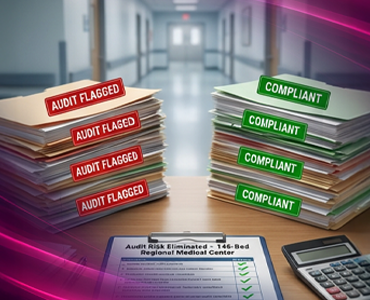
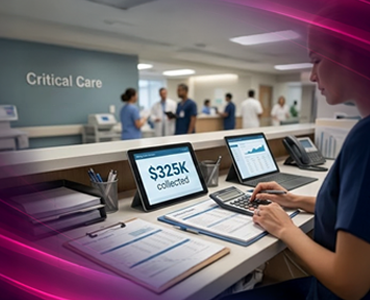
Discover how AnnexMed reduces denials, accelerates reimbursements, and strengthens financial performance. Backed by measurable outcomes and proven RCM expertise, we deliver operational excellence, revenue stability, and sustainable growth you can trust.

Client Voices
See how our clients succeed

Alina Lora

Alina Lora
Alina Lora
Proven RCM expertise. Delivered at scale.
For over 20 years, AnnexMed has delivered RCM solutions nationwide, combining expert billing, coding, and AR support to drive measurable results and growth.
- 20+ years of proven healthcare RCM experience
- 1,500+ professionals supporting billing, coding & AR
- 500+ certified coders across multiple specialties
- 99%+ compliance with HIPAA and security standards
- All 50 states served with consistent, scalable operations
