

Top 10 Best EHR Software for Small Practices
Choosing the right Electronic Health Record (EHR) software affects far more than clinical documentation. The right platform can improve provider productivity, streamline practice operations, strengthen patient engagement, and support more efficient billing workflows.
With numerous EHR vendors offering similar capabilities, selecting the best solution can be challenging. This comparison highlights the leading EHR software for small practices based on deployment model, specialty fit, operational capabilities, billing support, and overall practice suitability to help you make a more informed decision.
Why Small Practices Invest in EHR Software
The right EHR supports far more than clinical documentation. It becomes the operational backbone of a practice by connecting patient care, administrative workflows, compliance, and financial processes within a single system.
When evaluating EHR software, healthcare providers should consider how well the platform supports both current operational needs and future practice growth.
- Clinical Efficiency – Streamline documentation, ePrescribing, order management, and specialty-specific workflows
- Revenue Cycle Readiness – Support accurate documentation, coding workflows, charge capture, billing integration, and claims management
- Better Patient Experience – Enhance patient engagement through online scheduling, secure messaging, telehealth, digital intake, and patient portals
- Growth & Scalability – Select a platform that can support additional providers, new locations, third-party integrations

Comparison of Top EHR Software for Small Practices
Every practice has unique clinical workflows, specialty requirements, and operational priorities. Some EHR platforms focus on specialty-specific documentation, while others emphasize integrated billing, patient engagement, mobility, or practice management.
The comparison below provides a snapshot of the leading EHR software solutions based on their ideal use case, core capabilities, practice fit, and key differentiators.
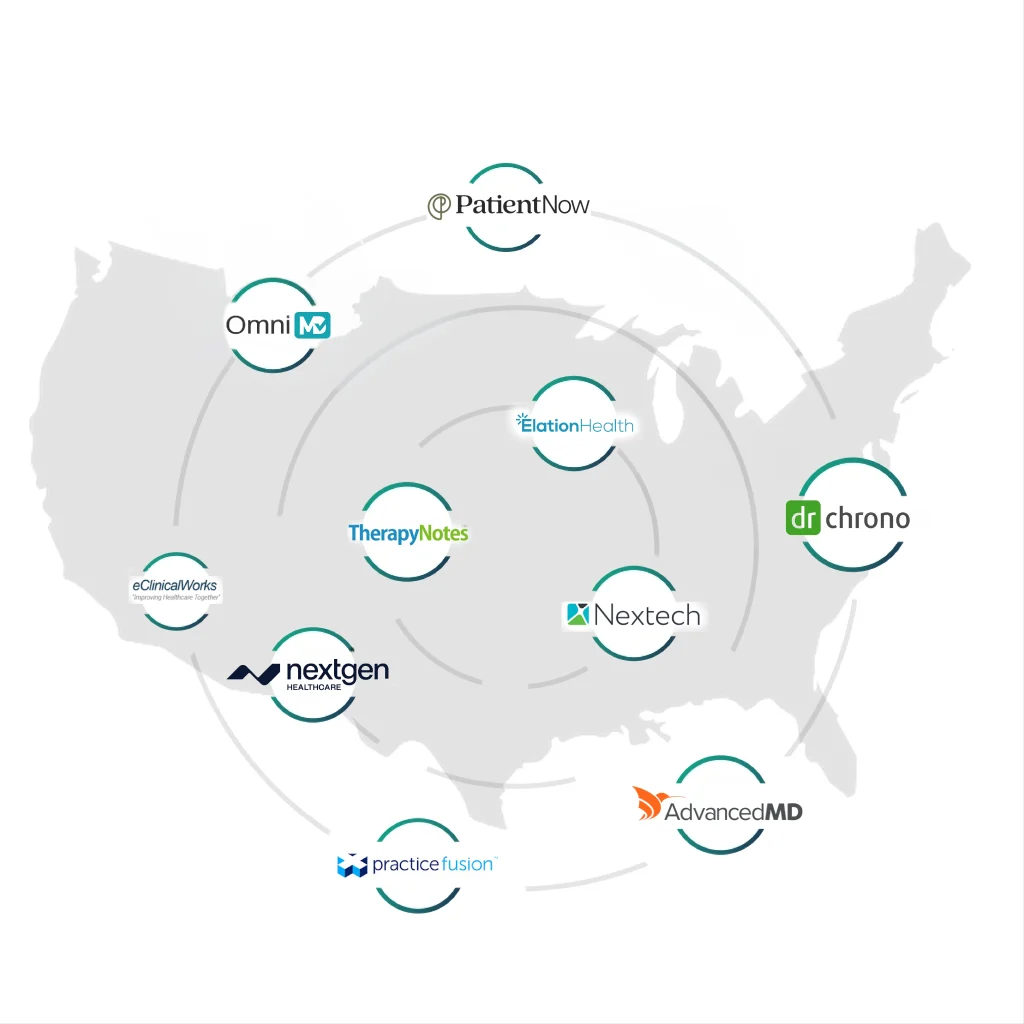
| EHR Software | Best For | Core Capabilities | Ideal Practice | Key Differentiator |
|---|---|---|---|---|

|
Multi-specialty providers | EHR, Practice Management, Revenue Cycle, Telehealth | Small to mid-sized physician practices | Integrated clinical and revenue cycle workflows |

|
Specialty physician groups | EHR, Practice Management, Patient Engagement, Analytics | Specialty and multi-provider practices | Highly customizable specialty-specific workflow |

|
Independent practices | EHR, Scheduling, Medical Billing, Telehealth | Solo to mid-sized practices | Unified practice management platform |

|
Independent physicians | Clinical Documentation, ePrescribing, Patient Portal | Solo and small practices | Simple, affordable cloud-based EHR |

|
Mobile-first providers | Mobile EHR, Medical Billing, Telehealth, Scheduling | Independent and growing practices | Mobile-first clinical workflow |

|
Primary care providers | Clinical documentation, ePrescribing, Population Health | Independent primary care practices | Physician-first documentation experience |

|
Medical spas and aesthetic practices | EHR, CRM, Patient Engagement, Billing | Cosmetic and aesthetic specialty practices | Practice growth and patient engagement tools |

|
Ophthalmology, Dermatology, Plastic Surgery | Specialty EHR, Imaging, Practice Management, Billing | Specialty physician practices | Specialty-focused documentation and imaging |

|
Multi-specialty clinics | EHR, Medical billing, Interoperability, Reporting | Small to mid-sized clinics | Flexible and customizable clinical workflows |

|
Behavioral health providers | Behavioral Health EHR, Telehealth, Billing, Scheduling | Mental Health and therapy practices | Purpose-built for behavioral health workflows |
Beyond the EHR Comparison Is Better Revenue Performance
Every EHR offers different capabilities. Let’s discuss how your preferred platform can support stronger billing workflows and long-term financial performance.
Detailed Review of Top RCM Companies
Below is a comparison of some of the leading RCM companies serving healthcare providers across the United States. Compare each provider based on specialties, service offerings, industry experience, and practice fit.
eClinicalWorks is one of the most widely adopted EHR platforms among ambulatory and multi-specialty physician practices. Designed to support both clinical and administrative operations, it combines electronic health records, practice management, patient engagement, telehealth, and revenue cycle management within a single ecosystem. Its broad functionality makes it a strong option for practices looking to centralize operations while supporting future growth.
Key Capabilities: • Electronic Health Records (EHR) • Practice Management • Revenue Cycle Management • Telehealth • Patient Portal • AI-assisted Documentation • Population Health Management
Why It Stands Out
Unlike platforms that require multiple third-party solutions, eClinicalWorks provides an integrated environment where providers can manage documentation, scheduling, billing, patient communication, and reporting from a single system. Its interoperability network and continuous product enhancements also make it suitable for practices planning long-term digital transformation.
Things to Consider
Because of its extensive functionality, implementation and workflow configuration may require additional planning. Practices should evaluate available modules carefully to ensure they align with operational priorities and specialty-specific requirements.
NextGen Healthcare is built for physician groups that require greater flexibility than a standard EHR platform can provide. It is particularly well suited for specialty practices that depend on customized documentation templates, specialty workflows, and advanced reporting. The platform balances clinical functionality with operational management, allowing organizations to adapt the system to their preferred way of working.
Key Capabilities: Specialty-specific documentation • Practice Management • Revenue Cycle Management • Patient Engagement • Telehealth • Clinical Analytics • Interoperability
Why It Stands Out
NextGen Healthcare distinguishes itself through its specialty-driven approach. Instead of offering generic clinical workflows, the platform enables practices to configure documentation and operational processes that closely reflect specialty-specific requirements, improving provider efficiency and workflow consistency.
Things to Consider
Organizations planning to deploy NextGen should allocate sufficient time for workflow customization and staff training to maximize the platform's capabilities.
Practices looking for an all-in-one business and clinical platform often consider AdvancedMD because it combines scheduling, documentation, billing, telehealth, patient engagement, and financial management within a unified solution. Rather than managing multiple disconnected applications, providers can oversee both patient care and administrative operations through a single interface
Why It Stands Out
Simplifies daily practice management by bringing clinical and financial workflows together in one platform. This unified approach reduces duplicate data entry while improving visibility across scheduling, billing, and patient communication activities.
Things to Consider
Independent practices benefit from its comprehensive functionality, while larger specialty organizations should evaluate whether additional workflow customization is necessary to support more complex operational requirements.
Practice Fusion has earned popularity among independent physicians by focusing on usability and affordability. Rather than competing through extensive enterprise functionality, the platform delivers the essential tools needed to manage clinical documentation and patient records without adding unnecessary operational complexity.
Key Capabilities: • Clinical Documentation • ePrescribing • Patient Portal • Laboratory Connectivity • Electronic Chart Management • Appointment Scheduling • Basic Billing Integration
Why It Stands Out
✔ Straightforward implementation
✔ Intuitive user interface
✔ Lower technology investment
✔ Minimal IT infrastructure requirements
✔ Easy adoption for smaller teams
Its simplicity makes it particularly attractive for practices moving from paper records or replacing legacy systems.
Things to Consider
While Practice Fusion provides strong core functionality, organizations requiring advanced reporting, specialty workflows, or extensive customization may need additional third-party solutions.
DrChrono approaches electronic health records differently by placing mobility at the center of the user experience. Providers can document encounters, manage appointments, prescribe medications, and review patient information directly from smartphones and tablets, making it an attractive option for physicians who value flexibility across multiple care settings.
Key Capabilities: • Mobile Documentation • Medical Billing • Telehealth • Patient Portal • Appointment Scheduling • Custom Clinical Templates • ePrescribing
Why It Stands Out
For practices embracing mobile-first workflows, DrChrono delivers one of the most intuitive user experiences among ambulatory EHR platforms. The platform combines mobility with integrated billing and practice management, allowing providers to maintain productivity whether they are in the office or working remotely.
Things to Consider
Before implementation, practices should review integration requirements with existing third-party applications and confirm that the platform supports their long-term operational and specialty-specific needs.
Elation Health is designed around the needs of independent primary care providers who prioritize long-term patient relationships and efficient clinical documentation. Instead of overwhelming users with unnecessary complexity, the platform focuses on simplifying everyday workflows, helping physicians spend more time with patients and less time navigating technology.
Key Capabilities: • Clinical Documentation • ePrescribing • Patient Scheduling • Population Health Management • Patient Portal • Laboratory Integration • Interoperability Support
Why It Stands Out
Follows a physician-first philosophy, emphasizing intuitive documentation and continuity of care. Its clean interface and longitudinal patient records help providers quickly access clinical histories, making it particularly valuable for practices focused on preventive and chronic care management.
Things to Consider
Revenue cycle functionality is primarily available through integrated billing partners. Practices should evaluate whether those integrations align with their existing billing workflows and long-term operational requirements.
PatientNow is purpose-built for medical spas, cosmetic surgery centers, dermatology clinics, and other aesthetic practices. In addition to traditional EHR functionality, the platform combines patient relationship management, scheduling, marketing automation, and billing tools, creating a comprehensive solution for practices operating in cash-pay and elective care environments.
Why It Stands Out
Extends beyond clinical documentation by helping practices attract, retain, and communicate with patients throughout their care journey. This combination of operational and patient engagement capabilities makes it particularly well suited for practices where business growth and patient experience are equally important.
Things to Consider
Although highly effective for aesthetic medicine, PatientNow is tailored to specialty practices and may not provide the broader clinical workflows required by general medical or multi-specialty organizations.
Nextech focuses on specialties that require highly detailed clinical documentation and image-based workflows, including ophthalmology, dermatology, and plastic surgery. The platform is designed to accommodate the unique operational and documentation requirements of these specialties while integrating practice management and billing functionality.
Why It Stands Out
Specialty strengths include:
Specialty-specific documentation templates
Integrated imaging capabilities
Procedure-focused workflows
Revenue cycle integration
Specialty reporting tools
Its focus on visual specialties allows providers to document encounters more efficiently while supporting the unique clinical needs of their practice.
Things to Consider
Practices outside Nextech's core specialties should carefully evaluate whether the platform's specialty-focused functionality aligns with their operational requirements.
OmniMD is designed for physician practices seeking flexibility in how they manage clinical and administrative workflows. The platform supports a wide range of specialties through configurable templates, interoperability, and integrated billing capabilities, making it suitable for organizations looking for a customizable EHR solution.
Core Services: Patient Access • Medical Billing • Medical Coding • Revenue Integrity • Denial Management • Accounts Receivable Management
Why It Stands Out
Rather than following a one-size-fits-all approach, OmniMD emphasizes workflow flexibility. Its configurable environment enables practices to tailor documentation, reporting, and operational processes according to their specialty and organizational preferences.
Things to Consider
Organizations should evaluate available customization options and reporting capabilities during implementation to ensure the platform supports both current workflows and future growth plans.
TherapyNotes is built specifically for behavioral health professionals, including psychologists, counselors, therapists, psychiatrists, and mental health clinics. The platform combines clinical documentation, scheduling, billing, and telehealth within a workflow designed around behavioral healthcare rather than general medical practice.
Key Capabilities: • Behavioral Health Documentation • Telehealth • Scheduling • Patient Portal • Behavioral Health Billing • Treatment Planning • Secure Clinical Notes
Why It Stands Out
Unlike general-purpose EHR platforms, TherapyNotes is designed exclusively for behavioral health. Its documentation workflows, treatment planning tools, and integrated billing capabilities closely align with the day-to-day needs of mental health providers, reducing administrative effort while supporting continuity of care.
Things to Consider
Practices offering broader medical specialties alongside behavioral health services should assess whether additional integrations or complementary systems are needed to support multidisciplinary care.
Common Challenges When Choosing an EHR
The table below highlights some of the most common challenges practices encounter during the EHR evaluation process and practical ways to address them.
Challenge
Potential Impact
Recommended Approach
Choosing software based only on features
Operational workflows may not align with practice needs
Evaluate how the EHR supports day-to-day clinical and administrative processes.
Limited interoperability
Data sharing challenges between systems
Verify integration with laboratories, pharmacies, clearinghouses, and existing applications.
Billing workflow compatibility
Increased claim delays and manual rework
Assess how the EHR supports coding, charge capture, billing, and practice management workflows.
Poor user adoption
Lower provider productivity
Select a platform with intuitive workflows and provide structured staff training.
Future scalability
Additional costs during practice growth
Choose software that supports additional providers, locations, and evolving operational requirements.
Data migration complexity
Risk of incomplete or inaccurate patient records
Develop a structured migration and validation plan before implementation.

How to Maximize the Value of Your EHR with AnnexMed
Why Practices Trust AnnexMed
Maximize the Value of Your EHR Investment
Talk with our revenue cycle specialists to understand how your EHR can better support coding, billing, claims management, and reimbursement performance.

Security and Compliance
You shouldn't only believe our words.
AnnexMed follows strong security and compliance practices to protect sensitive information. We are ISO certified and SOC II and HIPAA compliant, ensuring data security and privacy.

Frequently Asked Questions
Proven RCM expertise. Delivered at scale.
For over 20 years, AnnexMed has delivered RCM solutions nationwide, combining expert billing, coding, and AR support to drive measurable results and growth.
- 20+ years of proven healthcare RCM experience
- 2,000+ professionals supporting billing, coding & AR
- 500+ certified coders across multiple specialties
- 99%+ compliance with HIPAA and security standards
- All 50 states served with consistent, scalable operations
