





Suite 1300
Salt Lake City, UT 84111
Block-1 3rd Floor, Perungudi Bypass Rd, Perungudi,
Chennai - 600096
MGR Main Rd,
Perungudi, Chennai - 600096
Villupuram,
Tamil Nadu – 605602
Behavioral Health Billing for Hospitals
Precision Revenue Cycle for Session-Based Authorization-Driven Behavioral Health Care
Behavioral health reimbursement does not follow the logic of medical-surgical billing. Revenue depends on session accuracy, authorization compliance, documentation integrity, and parity enforcement — not DRGs or procedure codes. Gaps in any one of these dimensions translate directly into denied or unreimbursed care.
~600
Freestanding
Psychiatric Hospitals
hospital-based units
$280B+
US Behavioral
Health Spending
substance use disorders
18-22%
Industry Average
PHP/IOP Denial Rate
below 8%
MHPAEA
Federal Parity
Mandate
enforced by CMS
Overview
Behavioral Health Revenue Cycle Is a Specialized Discipline — Not a Variation of Hospital Billing
Why RCM performance matters in behavioral health?
Billing complexity unique to psychiatric & behavioral health facilities
IPF-PPS Per-Diem Billing
Inpatient psychiatric facilities are reimbursed under a per-diem system that applies up to 17 comorbidity adjustors, DRG multipliers, age and LOS adjustors, ECT treatment adjustors, interrupted stay rules, and geographic wage index factors. Every adjustor must be applied correctly on every claim — and most generalist billers get this wrong systematically. AnnexMed's IPF-PPS calibration process audits adjustor accuracy before any claims leave the facility.
Time-Based CPT Coding
Behavioral health services are billed by duration — 30-minute, 45-minute, and 60-minute psychotherapy codes carry different reimbursement rates. Errors in session duration documentation or coding translate directly into underpayment or denial. Group therapy vs. individual therapy billing, psychiatric evaluation coding, and medication management billing each carry distinct coding requirements that must be applied consistently across all session types and providers.
PHP and IOP Program Billing
Partial Hospitalization Programs (revenue code 0905/0906, minimum 20 hours/week) and Intensive Outpatient Programs (revenue code 0912, minimum 9 hours/week) are among the highest-value and most frequently under-billed behavioral health service categories. Documentation of minimum service intensity, individualized treatment plan compliance, and proper step-down transition documentation between PHP and IOP levels must be complete before claims are submitted. AnnexMed's PHP/IOP program audits consistently identify 10-20% in incremental revenue.
Prior Authorization and Visit Limit Management
Behavioral health payers apply prior authorization requirements, session caps, and concurrent review processes more aggressively than in any other service line. Authorization renewals, peer-to-peer escalations for medical necessity disputes, and concurrent review management require dedicated expertise. A missed renewal or late authorization request can invalidate an entire admission — a risk that AnnexMed's authorization management workflows are specifically designed to prevent.
Mental Health Parity Compliance
MHPAEA requires payers to apply comparable benefit limitations to mental health and SUD services as to medical-surgical services. In practice, payers routinely apply more restrictive prior authorization requirements, lower reimbursement rates, more aggressive medical necessity review, and tighter access standards to behavioral health than to comparable medical services. Identifying and challenging parity violations is both a compliance function and a revenue protection function — and it requires a billing partner who actively monitors payer behavior rather than simply processing claims.
Telehealth Behavioral Health Billing
Telehealth now accounts for a substantial portion of behavioral health service delivery — psychiatric services, psychotherapy, and medication management are widely delivered via synchronous video and audio-only platforms. Telehealth billing requires accurate modifier application (Modifier 95 for synchronous video, Modifier 93 for audio-only), correct POS coding (02 for telehealth, 10 for patient home), originating site fee billing where applicable, and multi-state telehealth compliance management. Permanent post-COVID telehealth rules created a complex, payer-variable landscape that requires continuous tracking.
Key RCM challenges
Authorization Denials and Visit Limit Exhaustion
Behavioral health payers apply more restrictive authorization requirements than virtually any other service line. Inpatient psychiatric admissions require pre-authorization, concurrent reviews — typically every 3-7 days — and specific documentation of continued medical necessity at each review point. A single failed renewal invalidates subsequent days of care. AnnexMed manages the full authorization lifecycle, including peer-to-peer escalation and internal appeal workflows.
Documentation Gaps Driving Medical Necessity Denials
Behavioral health medical necessity is inherently subjective and documentation-dependent. Payers require explicit, session-by-session clinical justification for inpatient level of care, PHP intensity, and IOP participation. Vague or formulaic documentation — common in high-volume psychiatric settings — creates systematic denial exposure. AnnexMed's pre-submission documentation review catches deficiencies before claims leave the facility, not after denial.
Systematically High PHP and IOP Denial Rates
PHP and IOP programs experience denial rates of 18-22% industry-wide, driven by inadequate service intensity documentation, revenue code errors, and payer-specific coverage policy violations. Most facilities accept these denial rates as normal. AnnexMed's behavioral health clients achieve PHP/IOP denial rates below 8% through documentation standards, pre-submission review protocols, and active parity compliance monitoring.
Substance Use Disorder Billing Complexity
SUD billing requires proficiency in ICD-10-CM F10-F19 diagnostic coding, HCPCS H-codes for Medicaid-covered SUD services, level-of-care billing for detoxification and residential SUD treatment, and 42 CFR Part 2 confidentiality protections that restrict information sharing in ways that affect billing workflows. SUD billing is governed by a distinct regulatory framework that most generalist billers are not equipped to navigate
Readmission Documentation and Payer Scrutiny
Psychiatric patients often experience episodic illness courses with multiple admissions over time. Payers increasingly treat repeat behavioral health admissions as indicators of unjustified inpatient utilization and apply heightened medical necessity scrutiny to readmissions. Documentation that establishes changed clinical circumstances, prior treatment failure at lower levels of care, or genuine clinical deterioration is essential to prevent systematic readmission denial.
Crisis Services Billing and Evolving Reimbursement Rules
Crisis stabilization units, mobile crisis teams, and 23-hour crisis observation programs represent a rapidly expanding frontier of behavioral health service delivery — and a rapidly evolving billing landscape. Crisis service billing codes (HCPCS H2011, CPT 90839-90840, TOB 13X for 23-hour observation) are still evolving as CMS and state Medicaid programs develop coverage policies. AnnexMed tracks and implements these changes in real time as the crisis care billing environment matures.
Clinical services provided by AnnexMed
IPF-PPS Per-Diem Billing
Complete inpatient psychiatric facility billing with all adjustor applications — DRG multiplier, age, LOS, up to 17 comorbidity adjustors, ECT, interrupted stay, and geographic wage index — validated before submission.
PHP Program Billing
Partial Hospitalization Program billing using revenue codes 0905 (mental health) and 0906 (SUD), with minimum service intensity documentation, individualized treatment plan compliance, and per-diem optimization.
IOP Program Billing
Intensive Outpatient Program billing with distinct revenue coding, service intensity documentation at the 9-hour threshold, and step-down transition management between PHP and IOP levels of care.
Time-Based Psychotherapy Coding
Session-duration coding for individual psychotherapy (30, 45, 60 minutes), group therapy, interactive complexity, and crisis psychotherapy — validated against documentation for accuracy before claim submission.
Prior Authorization Management
Full authorization lifecycle management for psychiatric admissions — initial auth, concurrent review coordination, renewal tracking, peer-to-peer escalation for medical necessity disputes, and denial prevention workflows.
Telehealth Behavioral Health Billing
Synchronous and audio-only telehealth modifier application (95/93), POS coding (02/10), originating site fee billing, and multi-state telehealth compliance management for all behavioral health telehealth modalities.
Substance Use Disorder Billing
Detoxification, residential SUD, and outpatient SUD billing including ICD-10-CM F10-F19 coding, HCPCS H-codes for Medicaid, and 42 CFR Part 2 confidentiality compliance integrated into billing workflows.
Crisis Services Billing
Crisis stabilization, mobile crisis, and 23-hour crisis observation billing using HCPCS H2011, CPT 90839-90840, and facility-level crisis service billing frameworks updated in real time as coverage policies evolve.
ECT and Medication Management Billing
Electroconvulsive therapy billing including the IPF-PPS ECT adjustor (CPT 90870), long-acting injectable and depot medication billing, and psychiatric medication administration coding.
Parity Compliance Monitoring
Active payer benefit limitation analysis, MHPAEA compliance tracking, parity violation identification, and formal payer dispute escalation support — protecting both revenue and patient access.
Psychiatric Evaluation Coding
Inpatient psychiatric evaluation coding, initial and subsequent psychiatric care (CPT 99231-99233), diagnostic consultation, crisis evaluation, and medication management billing.
Denial Management and Appeals
IPF-PPS billing disputes, PHP/IOP level-of-care denials, parity violation appeals, SUD coverage challenges, and crisis service coverage disputes — with evidence-based appeal documentation.
Key billing & coding reference
Billing Dimension
Detail & AnnexMed Approach
Claim Form
UB-04 for IPF facility billing; CMS-1500 for psychiatric professional billing (psychiatrists, psychologists, therapists)
IPF-PPS Reimbursement
Per-diem base rate x DRG multiplier x age/LOS/comorbidity/ECT/geographic adjustors — applied correctly on every inpatient claim
IPF Comorbidity Adjustors
Up to 17 qualifying comorbidity adjustors; each qualifying diagnosis adds a per-diem payment increase — systematic omission is common and recoverable
PHP Revenue Codes
0905 (mental health PHP); 0906 (SUD PHP); minimum 20 hours/week; individualized treatment plan required at each billing period
IOP Revenue Codes
0912 (mental health IOP); 0906 (SUD IOP); minimum 9 hours/week; step-down from PHP requires distinct transition documentation
Time-Based Psychotherapy
90832 (30 min), 90834 (45 min), 90837 (60 min) individual; 90853 group; duration must be documented in session notes to support the code billed
Telehealth Modifiers
Modifier 95 (synchronous video); Modifier 93 (audio-only); POS 02 (telehealth other than home); POS 10 (telehealth patient home); originating site fees apply where applicable
Crisis Services
H2011 (crisis intervention); CPT 90839-90840 (psychiatric crisis); 23-hour observation Type of Bill 13X; mobile crisis billing varies by state Medicaid policy
SUD ICD-10 Range
ICD-10-CM F10-F19 for substance-related and addictive disorders; 42 CFR Part 2 confidentiality protections restrict information sharing in billing workflows
ECT Billing
CPT 90870 (therapeutic ECT); IPF-PPS ECT adjustor applied per treatment session; anesthesia coordination billing handled separately
Parity Law
MHPAEA requires comparable benefit limitations to medical/surgical — actively enforced by CMS and DOL; parity violations are both a compliance issue and a revenue recovery opportunity
Key Denial Types
Medical necessity for admission level, PHP/IOP intensity disputes, parity violations, authorization failures, readmission scrutiny, and time-based coding mismatches
Why AnnexMed for psychiatric & behavioral health facilities?
AI-powered intelligence for behavioral health RCM
Authorization Risk Prediction
AI flags admissions and session requests at elevated risk of authorization denial based on payer behavior patterns, diagnosis codes, and clinical documentation completeness — enabling proactive intervention before denial.
Documentation Gap Detection
Pre-submission AI review identifies medical necessity documentation gaps, missing session duration notes, and incomplete treatment plan elements before claims are submitted — preventing the denials rather than appealing them.
Time-Based Coding Validation
AI cross-references session documentation with CPT codes billed, flagging mismatches between documented session duration and the code selected — a common source of systematic underpayment in behavioral health.
Parity Violation Pattern Detection
AI monitors payer response patterns across authorizations, denials, and reimbursement rates, identifying behavior that suggests MHPAEA parity violations — enabling evidence-based parity complaints and appeals.
IPF-PPS Adjustor Accuracy Audit
AI validates all per-diem adjustors — comorbidity, ECT, age, LOS, geographic — against diagnosis codes and clinical data before billing, catching the systematic adjustor omissions that cost facilities millions annually.
Session Utilization vs. Authorization Monitoring
AI tracks authorized visit counts against sessions billed in real time, alerting before session limits are reached so authorization renewals are secured before coverage gaps occur.
AnnexMed's implementation approach
A structured five-step onboarding process designed specifically for behavioral health facility workflows:
IPF-PPS Calibration
Adjustor accuracy audit — comorbidity, ECT, LOS, geographic — and billing system configuration validated against CMS rate tables
PHP/IOP Program
Review
Service intensity documentation audit and revenue code workflow optimization for day programs across mental health and SUD service lines
Parity & Auth
Assessment
Payer benefit limitation review, MHPAEA compliance baseline establishment, and authorization workflow configuration for primary payers
Telehealth &
Coding Setup
Modifier, POS, and originating site billing protocols configured; time-based coding validation rules activated for all session types
Ongoing Operations
Full IPF billing, PHP/IOP, crisis services, parity monitoring, authorization management, and denial management fully active
Find Out What Your Behavioral Health Facility Is Leaving on the Table
Dedicated behavioral health RCM specialists | AAPC & AHIMA Certified | SOC 2 Type II | 100+ healthcare providers served
Case Studies
See the impact we deliver
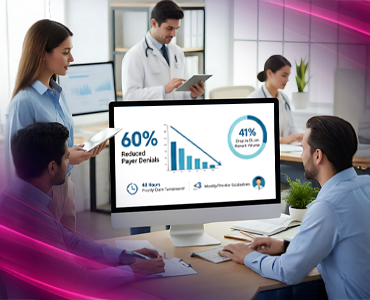
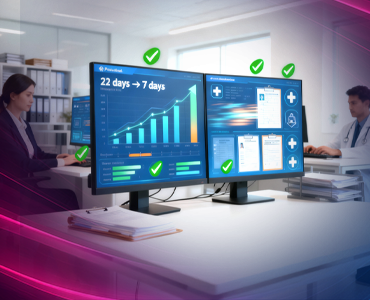
Discover how AnnexMed reduces denials, accelerates reimbursements, and strengthens financial performance. Backed by measurable outcomes and proven RCM expertise, we deliver operational excellence, revenue stability, and sustainable growth you can trust.
Client Voices
See how our clients succeed
Margaret Okonkwo
David Fischler
Priya Venkatesh
Proven RCM expertise. Delivered at scale.
For over 20 years, AnnexMed has delivered RCM solutions nationwide, combining expert billing, coding, and AR support to drive measurable results and growth.
- 20+ years of proven healthcare RCM experience
- 1,500+ professionals supporting billing, coding & AR
- 500+ certified coders across multiple specialties
- 99%+ compliance with HIPAA and security standards
- All 50 states served with consistent, scalable operations
