

Top Revenue Cycle Management Companies in USA 2026
Finding the right revenue cycle management partner can significantly improve collections, reduce claim denials, and ease administrative burden. We have compared leading revenue cycle management companies serving hospitals, health systems, physician groups, and specialty practices. Explore each partner’s services, specialties, experience, and strengths to find your best fit.
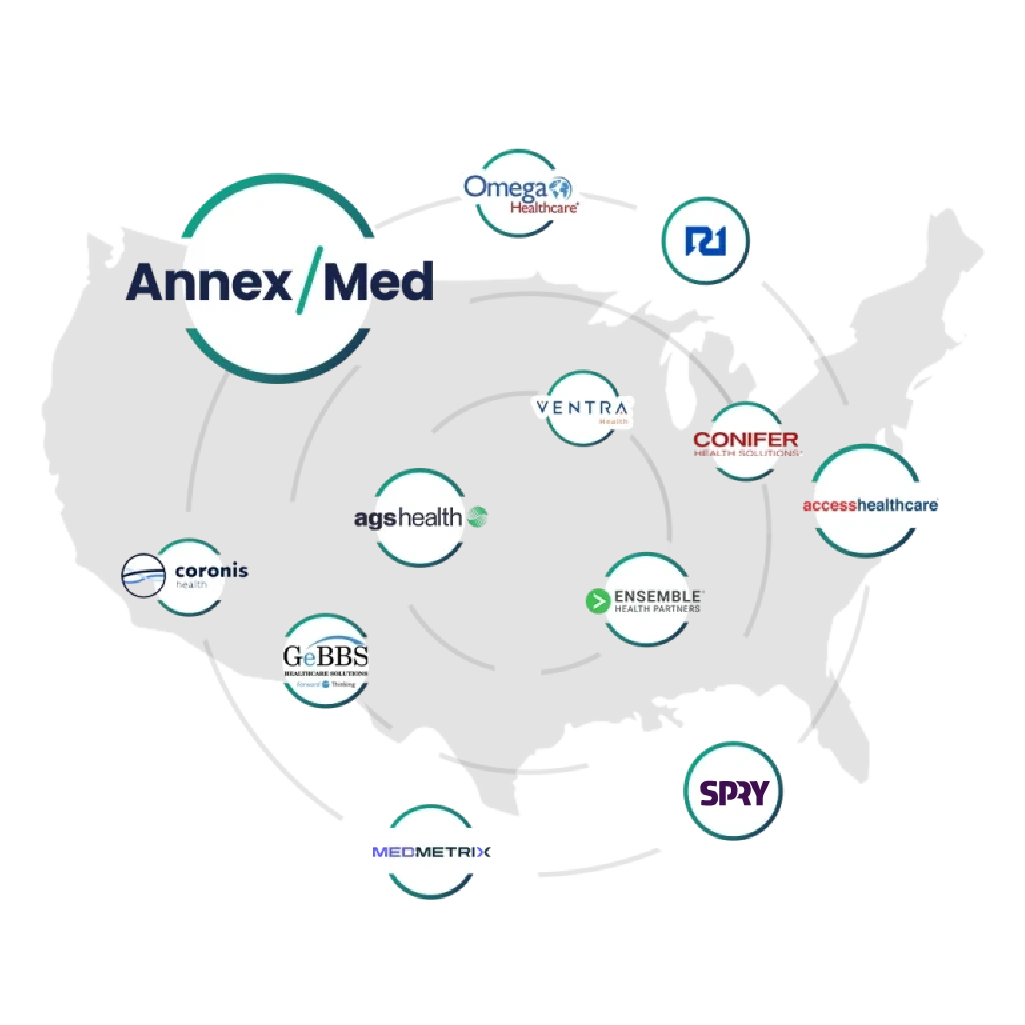
Why Healthcare Organizations Outsource Revenue Cycle Management
Denial Prevention &
Recovery
Reduce preventable denials through stronger eligibility verification, coding accuracy, claims validation, and structured appeals management.
Coding & Documentation
Expertise
Maintain coding quality across ICD-10-CM, CPT, HCPCS, DRG, and specialty-specific documentation requirements while adapting to annual coding updates.
Revenue Integrity &
Compliance
Strengthen charge capture, reimbursement accuracy, payer compliance, and audit readiness through standardized revenue cycle processes.
Operational
Scalability
Support increasing patient volumes, provider growth, acquisitions, legacy AR projects, and seasonal workload fluctuations without expanding internal teams
Compare Top Revenue Cycle Management Companies
The following comparison highlights some of the leading revenue cycle management companies serving hospitals, health systems, physician groups, and specialty practices across the United States. Review each provider’s core services, specialty focus, and standout strengths to narrow your shortlist.
| Company | Best For | Core Services | Specialty Focus | Standout Strength |
|---|---|---|---|---|

|
Hospitals, Health Systems & Provider Groups | Specialty-Focused End-to-End Revenue Cycle Management | 40+ Medical Specialties | Specialty-driven RCM with Legacy AR and Revenue Integrity Expertise |

|
Health Systems & Provider Organizations | End-to-End RCM, Coding, Patient Access | Multi-specialty | RCM delivery with global operations |

|
Hospitals & Integrated Health Systems | Revenue Cycle Management, Coding, Clinical Documentation | Multi-specialty | AI-enabled RCM backed by clinical expertise |
|
Hospital Systems | End-to-End Revenue Cycle Management | Acute Care & Health Systems | Hospital revenue cycle operations |

|
Physician Practices & Specialty Groups | Medical Billing, Coding, Practice RCM | Multi-specialty | Flexible outsourcing for physician practices |

|
Hospitals & Health Systems | End-to-End Revenue Cycle Management | Hospital Revenue Cycle | Performance-driven revenue cycle transformation |

|
Hospitals & Provider Groups | Medical Coding, Billing, CDI, RCM | Multi-specialty | Strong coding and compliance expertise |

|
Outpatient PT, OT & SLP Private Practices | AI-Powered EMR + End-to-End RCM | Physical Therapy, Occupational Therapy, Speech-Language Pathology | Integrated software, billing team, and patient data in one system |

|
Hospitals & Health Systems | Revenue Cycle Management & Consulting | Hospital Revenue Cycle | Operational improvement and financial optimization |

|
Health Systems & Provider Organizations | End-to-End RCM, Coding, Analytics | Multi-specialty | Global healthcare operations with deep RCM expertise |

|
Health Systems | Enterprise Revenue Cycle Management | Hospitals | Comprehensive enterprise revenue cycle outsourcing |

|
Anesthesia & Emergency Medicine Practices | Specialty Billing & Revenue Cycle Management | Anesthesia, Emergency Medicine | Deep specialty reimbursement expertise |
Beyond the Comparison Lies the Right Partner
Let’s connect to understand your revenue cycle priorities and see if AnnexMed is the right fit for your organization.
Detailed Review of Top RCM Companies
Below is a comparison of some of the leading RCM companies serving healthcare providers across the United States. Compare each provider based on specialties, service offerings, industry experience, and practice fit.
AnnexMed
AnnexMed is a U.S based revenue cycle management (RCM) company providing outsourced revenue cycle services for hospitals, physician groups, medical service organizations (MSOs), and healthcare billing companies. The company delivers end-to-end revenue cycle support by integrating with existing workflows, service-level agreements (SLAs), and reporting frameworks rather than replacing internal operations.
With 20+ years of healthcare revenue cycle experience, With 99% Client retention rate, AnnexMed has been a trusted partner supporting hospitals and providers through dedicated operational teams and structured delivery models. The company was recognized in Becker’s Hospital Review’s 385+ Revenue Cycle Management Companies to Know for 2026.
Core Services: Patient Access • Medical Billing • Medical Coding • Claims Management • Payment Posting • Denial Management • Accounts Receivable Management
Find the Right RCM Approach for Your Organization
Discuss your goals with our specialists and identify the engagement model that best fits your revenue cycle.
Access Healthcare is a revenue cycle management company providing outsourced RCM services for different healthcare organizations. The company supports providers across the revenue cycle through large-scale operational delivery and global service teams.
Access Healthcare supports healthcare organizations that require high-volume operational capacity across multiple revenue cycle functions. Its delivery model combines standardized workflows with dedicated teams, making it a common choice for organizations looking to extend internal RCM operations rather than build additional in-house resources.
Core Services: Patient Access • Medical Billing • Medical Coding • Claims Management • Payment Posting • Denial Management • Accounts Receivable Management
AGS Health provides revenue cycle management services as part of its broader healthcare services portfolio.The company combines revenue cycle operations with medical coding and clinical documentation services.
AGS Health has developed focus in clinical documentation improvement (CDI), coding quality, and revenue integrity. Healthcare organizations often evaluate the company when looking for an RCM partner that combines operational support with clinical and coding expertise.
Core Services: Revenue Cycle Management • Medical Coding • Clinical Documentation Improvement • Denial Management • Revenue Integrity • Accounts Receivable Services
Conifer Health Solutions delivers services that support healthcare financial operations and revenue cycle management. Its offerings include administrative and operational functions that contribute to patient financial processes and reimbursement activities.
Conifer is recognized for its enterprise-scale approach to revenue cycle management.. Its services are designed to help health systems streamline financial operations, improve patient access, and strengthen reimbursement performance across the revenue cycle.
Core Services: Patient Access • Medical Billing • Claims Management • Payment Posting • Denial Management • Revenue Integrity
Coronis Health offers outsourced revenue cycle management services within the healthcare industry. The company provides operational support across billing, coding, reimbursement, and other administrative revenue cycle activities.
Coronis Health has partnered with physician groups and specialty practices through flexible engagement models and specialty-focused billing services. The company supports organizations seeking operational support without replacing existing practice workflows
Core Services: Medical Billing • Medical Coding • Revenue Cycle Management • Denial Management • Accounts Receivable Management • Practice Support
Ensemble Health Partners is a healthcare revenue cycle management company focused on supporting patient financial operations. Revenue cycle management represents its primary business, with services spanning multiple administrative and reimbursement-related activities across the healthcare continuum.
Ensemble is known for its collaborative delivery model, working closely with health systems to improve revenue cycle performance while integrating with existing operational teams
Core Services: Patient Access • Revenue Cycle Management • Medical Billing • Revenue Integrity • Denial Management • Accounts Receivable Services
GeBBS Healthcare Solutions provides revenue cycle management, medical coding, clinical documentation, and compliance services for healthcare providers. The company operates within the healthcare outsourcing sector, serving organizations across different care settings.
GeBBS is widely recognized for its expertise in medical coding, clinical documentation improvement (CDI), and compliance. Many healthcare organizations engage the company to strengthen coding accuracy while supporting broader revenue cycle operations.
Core Services: Medical Coding • Medical Billing • Clinical Documentation • Denial Management • Revenue Cycle Management • Compliance Services
AI-native EMR and revenue cycle management platform built exclusively for outpatient physical therapy, occupational therapy, and speech-language pathology private practices. Unlike traditional RCM vendors, Spry owns the full billing stack, combining practice management software, US-based specialty billers, and patient data within a single system rather than layering a billing service on top of a separate EMR.
Spry serves 500+ outpatient rehab clinics across the US and delivers RCM outcomes including a 98%+ clean claim rate and sub-15-day accounts receivable. Its AI-powered documentation tools reduce note completion time at the point of care, while its billing team handles claims, denials, and collections using the same data set, eliminating reconciliation gaps common in outsourced RCM arrangements.
Core Services: Medical Billing • Claims Submission & Management • Denial Management • Payment Posting • Accounts Receivable Management • AI-Powered Clinical Documentation
Med-Metrix provides revenue cycle management services alongside healthcare financial and operational support. Its capabilities includes administrative services associated with reimbursement, patient financial processes, and revenue cycle operations.
Med-Metrix is known for helping healthcare organizations improve operational efficiency and revenue integrity through both managed services and advisory support. Its approach appeals to organizations seeking operational improvements alongside revenue cycle expertise.
Core Services: Revenue Cycle Management • Medical Billing • Revenue Integrity • Denial Management • Accounts Receivable Services • Financial Consulting
Omega Healthcare is a healthcare outsourcing company that includes revenue cycle management among its healthcare service offerings. Revenue cycle functions are delivered alongside other administrative processes supporting healthcare organizations.
Omega Healthcare has built its reputation through healthcare operations supporting providers with billing, coding, accounts receivable, and back-office services. Organizations often evaluate the company for its ability to support high-volume revenue cycle operations.
Core Services: Medical Billing • Medical Coding • Revenue Cycle Management • Denial Management • Payment Posting • Accounts Receivable Management
R1 RCM is an enterprise revenue cycle management company serving healthcare organizations. The company provides outsourced revenue cycle services spanning patient access, reimbursement, and financial operations.
Over the years, R1 RCM has expanded its business through acquisitions and strategic partnerships, making enterprise revenue cycle management a central part of its operating model. The company works with healthcare organizations that choose to outsource portions of their revenue cycle or broader financial operations to external service providers.
Core Services: Patient Access • Medical Billing • Medical Coding • Revenue Integrity • Denial Management • Accounts Receivable Management
Ventra Health provides revenue cycle management services supporting billing, coding, reimbursement, and administrative healthcare processes. Revenue cycle operations form part of the company's healthcare service offerings.
Ventra Health has developed deep expertise in specialties where coding accuracy and specialty-specific billing play a significant role in reimbursement. Organizations within anesthesia and emergency medicine often evaluate the company for its focused operational experience.
Core Services: Specialty Medical Billing • Medical Coding • Denial Management • Accounts Receivable Management • Revenue Cycle Management • Practice Support
Why Healthcare Organizations Choose AnnexMed For RCM
The right revenue cycle management partner brings together experience, operational discipline, and measurable performance. These qualities have shaped AnnexMed’s approach to supporting healthcare organizations across every stage of the revenue cycle.
- 1300+ Dedicated RCM Specialists
- HIPPA Complaint Workflows
- AI + Expert Hybrid Delivery model
- U.S. Based & Offshore Teams
98%
Clean Claim Rate
40+
EHR platform expertise
35%
Average Cost Saving
50+
Medical Specialties served
24/7
Revenue Cycle Operations
100+
Organizations supported
Why Healthcare Organizations Choose AnnexMed For RCM
The right revenue cycle management partner brings together experience, operational discipline, and measurable performance. These qualities have shaped AnnexMed’s approach to supporting healthcare organizations across every stage of the revenue cycle.
- 1300+ Dedicated RCM Specialists
- HIPPA Complaint Workflows
- AI + Expert Hybrid Delivery model
- U.S. Based & Offshore Teams
98%
Clean Claim
Rate
40+
EHR Platform Expertise
35%
Average Cost Saving
50+
Medical Specialties Served
24/7
Revenue Cycle Operations
100+
Organizations Supported
Why AnnexMed Is Trusted for Revenue Cycle Management
Executive-Level Governance
Leadership reviews, operational scorecards, and strategic business reviews provide stakeholders with visibility beyond day-to-day production metrics.
AI-Enabled Operations
AI supports repetitive workflows, while experienced RCM professionals oversee coding, billing, denials, and quality to improve speed, accuracy, and consistency.
Integrated Delivery Model
AnnexMed works as an extension of internal revenue cycle teams, integrating with existing workflows, EHRs, governance models, and reporting structures.
End-to-End Accountability
One partner manages the revenue cycle from patient access through accounts receivable, reducing operational handoffs and improving ownership.
Flexible Engagement
Organizations can outsource the entire revenue cycle or selected functions without long-term contractual commitments.
Measurable Performance
Operational reporting, quality assurance, and KPI tracking provide visibility into collections, denials, productivity, and reimbursement performance.
Revenue Cycle Management Services, Powered by AI
AI is transforming revenue cycle management, but technology alone doesn’t improve financial performance. AnnexMed combines AI-powered automation with experienced RCM professionals to accelerate workflows, strengthen accuracy, and improve operational visibility.
AI Agents Across the Revenue Cycle
AI supports eligibility verification, medical coding, claims management, denial prevention, payment posting, and accounts receivable workflows while RCM experts maintain quality and compliance.
Revenue Cycle Data Intelligence
Interactive dashboards provide visibility into claims, denials, aging A/R, collections, and operational KPIs, helping healthcare leaders make informed decisions.
Predictive Denial Prevention
AI identifies coding inconsistencies, documentation gaps, and payer-specific denial risks before claims are submitted, helping reduce preventable denials.
Intelligent Workflow Automation
Automation routes work based on priority, payer rules, specialty, and workload, improving turnaround times without changing existing EHR or PM systems.

Security and Compliance
You shouldn't only believe our words.
AnnexMed follows strong security and compliance practices to protect sensitive information. We are ISO certified and SOC II and HIPAA compliant, ensuring data security and privacy.

Frequently Asked Questions
Proven RCM expertise. Delivered at scale.
For over 20 years, AnnexMed has delivered RCM solutions nationwide, combining expert billing, coding, and AR support to drive measurable results and growth.
- 20+ years of proven healthcare RCM experience
- 2,000+ professionals supporting billing, coding & AR
- 500+ certified coders across multiple specialties
- 99%+ compliance with HIPAA and security standards
- All 50 states served with consistent, scalable operations
