Client Overview
The organization is a six-hospital health system with more than $2.1B in annual net patient revenue, supporting high procedural volume across surgery, imaging, gastroenterology, cardiology, and hospital-based outpatient departments.
While downstream revenue cycle indicators appeared directionally stable, leadership identified a growing pattern of financial erosion occurring upstream—before claims were created and before traditional revenue cycle controls applied.
Procedure cancellations, delayed starts, and authorization-related denials were increasing. Individually, these events appeared operational in nature. Collectively, they represented a material and underreported source of revenue volatility.
Challenges
Need for Intervention
There were concerns escalated for three reasons:
- First, revenue loss was occurring prior to billing, limiting the ability to recover dollars through appeals or follow-up.
- Second, last-minute cancellations disrupted OR and procedural utilization, impacting both financial performance and clinician scheduling.
- Third, authorization failures created rework and friction without providing leadership with a clear, consolidated view of where risk was accumulating or why.
What Changed the Conversation
Rather than anchoring analysis on denial counts or appeal success rates, the engagement reframed the problem around exposure.
The assessment focused on:
- Which procedures were most vulnerable to authorization failure
- How payer requirements varied by facility and service line
- When authorization risk became visible relative to the day of service
- Where escalation broke down when requirements were not met
The findings were consistent across the system. Teams were working diligently, but risk surfaced too late, and decisions were made without a standardized framework.
AnnexMed Solution:
The Hospital system elected to treat authorization and medical necessity as pre-service financial controls, not administrative tasks. This required changes across policy, workflow, and visibility, implemented deliberately to avoid disruption to patient access or clinical operations.
Reframing Authorization as Risk Management
Procedures were stratified based on:
- Authorization complexity
- Financial exposure
- Payer variability
This allowed the system to distinguish routine cases from those requiring early intervention, rather than applying uniform effort across all encounters.
Embedding Payer Logic Upstream
Payer-specific authorization and medical necessity requirements were embedded directly into scheduling and access workflows. This ensured that requirements were identified at the point of scheduling, not days later during verification or post-service review.Standard decision rules reduced interpretation variance across sites while preserving local execution.
Advancing Risk Identification
High-risk procedures were flagged 72 hours prior to service, creating a defined window for resolution. This shifted effort from day-of-service firefighting to proactive clearance. Clear escalation paths were established for cases requiring additional documentation, peer review, or payer engagement.
Aligning Medical Necessity and Documentation
Documentation checkpoints were aligned to payer-specific medical necessity criteria. This reduced downstream appeals by ensuring that supporting information was present before services were rendered. The goal was not more documentation but the right documentation at the right time.
Outcomes
Within 90 days, the organization saw measurable improvement across revenue protection, operational stability, and executive control.
- Authorization performance stabilized – Approval rates increased from 86% to 96%, driven by earlier identification of payer requirements and consistent escalation for high-risk cases.
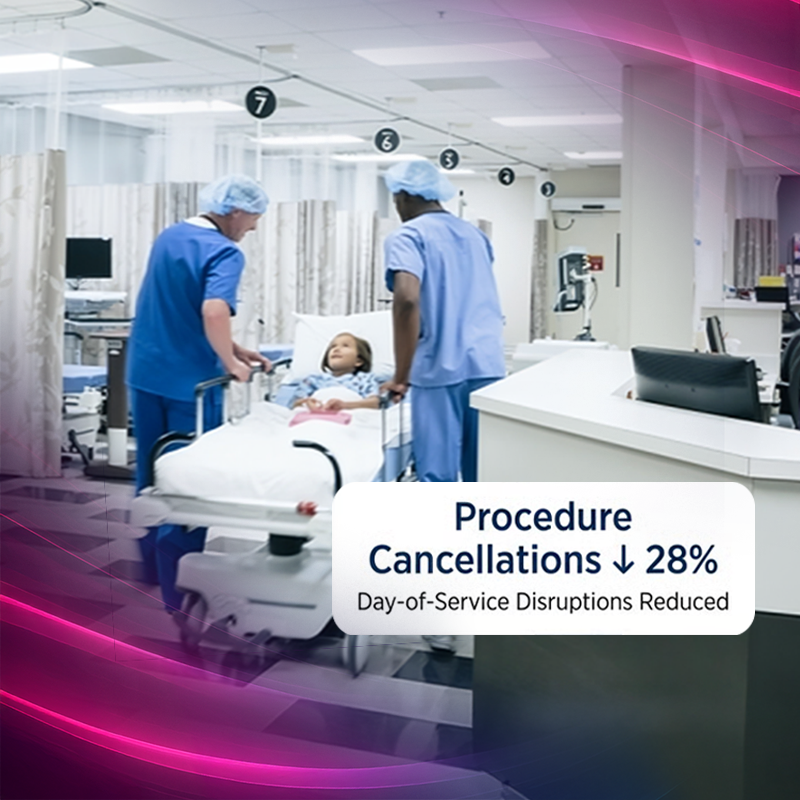
- Day-of-service disruptions declined – Procedure cancellations were reduced by 28%, improving OR and procedural utilization without delaying patient access.
- Revenue leakage was prevented upstream – Authorization-related denials declined by 41%, reducing downstream rework and accelerating clean claim submission.
- Cash realization improved earlier in the cycle – Point-of-service collections increased by 14%, lowering downstream self-pay risk.
- Executive visibility increased – Leadership gained real-time insight into pre-service clearance rates, authorization lag, and revenue at risk, enabling proactive intervention.
Ready to Get Started?
Whether you need full-scale support or help with just one part of the revenue cycle, AnnexMed offers modular services tailored to your most pressing needs.
Let's get started with,
- A quick discovery call to understand your goals
- Insights on how our services align with your workflows
- Guidance on compliance, turnaround, and scaling
- Option to request case study examples
Why AnnexMed?
- 20+ Years of RCM Excellence
- HIPPA Compliance Workflows
- 50+ Specialties Supported
- U.S. Based & Offshore Hybrid Teams