
Last Updated on September 2, 2026
Applied Behavior Analysis (ABA) therapy operates within one of the most authorization-dependent reimbursement models in healthcare. In ABA billing, prior authorization determines whether services can be reimbursed, how many units are billable, and when revenue can be recognized.
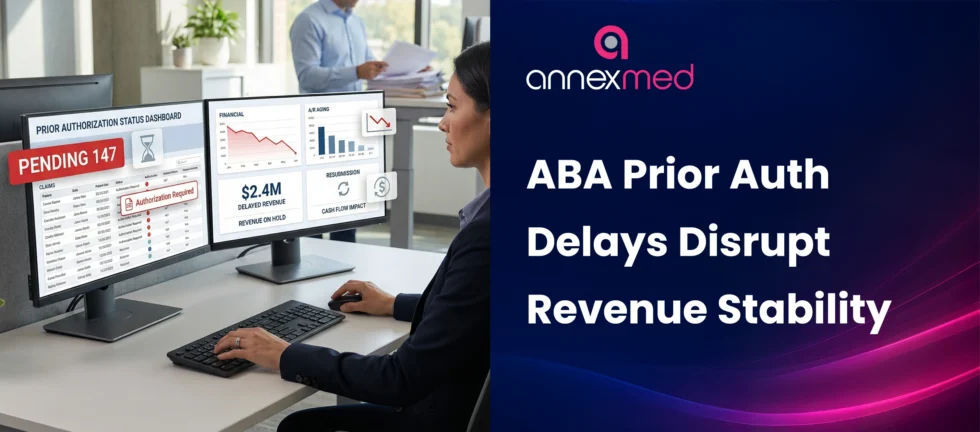
ABA prior authorization delays directly affect revenue timing, accounts receivable aging, therapist utilization, and long-term cash flow stability. Because ABA services are delivered in high frequency and unit-based formats, even short authorization gaps can create measurable financial disruption within a single billing cycle.
Understanding how authorization timelines interact with ABA reimbursement models helps practices protect revenue predictability and operational consistency.
Table of Contents
The Role of ABA Prior Authorization in Reimbursement and Cash Flow
ABA reimbursement is tightly connected to approved units. Unlike many specialties where authorization is limited to specific procedures, ABA therapy often requires recurring approvals tied to treatment plans and ongoing progress evaluations.
Initial Authorizations and Re-Authorizations in ABA Therapy
Most ABA cases begin with an initial authorization that defines:
- Approved service types
- Frequency of therapy sessions
- Supervision requirements
- Unit limits for a defined period
As treatment continues, re-authorizations must be submitted with updated documentation and clinical justification. Any delay in this renewal process can interrupt billing continuity.
In ABA therapy, authorization cycles function as financial checkpoints. When renewal timelines are missed or approvals are delayed, revenue timing shifts immediately.
How Authorized Units Directly Impact ABA Revenue
Authorized units determine what can be billed. If units are exhausted or expire without renewal:
- Sessions may be delivered but cannot be billed
- Claims may be denied due to lack of authorization
- Revenue may be delayed pending retroactive approval
In ABA billing, revenue is directly tied to approved service units. When authorization approvals are delayed, claims submission is postponed, and expected payments move into later accounting periods. Repeated timing shifts reduce forecasting reliability and increase pressure on operational reserves.
Because ABA often involves high-frequency sessions, even short authorization gaps can create significant revenue variability within a single billing cycle.
How ABA Prior Authorization Delays Affect Cash Flow
ABA prior authorization delays disrupt cash flow by delaying claim submission, increasing unbilled services, and extending accounts receivable cycles. When authorization approval is pending, claims cannot be processed even if services are clinically delivered. This creates revenue timing shifts that affect payroll planning, forecasting accuracy, and financial stability.
Revenue Timing Delays in ABA Billing Cycles
When authorizations are pending, billing teams must hold claims. Payments that were expected within the month may move into the next revenue period. For growing ABA practices, these shifts influence:
- Payroll planning
- Budget forecasting
- Hiring decisions
- Investment in expansion
Even when reimbursement is eventually received, inconsistent timing affects operational predictability.
Unbilled Sessions and Retroactive Authorization Risks
Sessions delivered during pending authorization periods often remain unbilled. If payers grant retroactive approval, billing can proceed. If not, practices must:
- Appeal denials
- Write off services
- Absorb administrative follow-up costs
Extended holding periods increase administrative workload and reduce billing efficiency. The longer revenue remains in limbo, the more difficult it becomes to manage AR performance consistently.
Denials Linked to Authorization Errors
Authorization-related denials are among the most preventable revenue disruptions in ABA billing. Expired approvals, incorrect unit counts, or mismatched service codes can trigger automatic claim rejections. Each denial increases follow-up workload, extends AR days, and delays reimbursement recovery.
Over time, repeated authorization errors inflate denial rates and place additional strain on revenue cycle teams.
90-Day Legacy AR Recovery Plan
Therapist Scheduling and Productivity Disruptions
ABA staffing models rely on predictable caseloads. Authorization delays can result in:
- Reduced session scheduling
- Therapist idle time
- Reassigned or rescheduled appointments
- Inconsistent caseload utilization
Revenue stability in ABA depends on both reimbursement accuracy and therapist productivity alignment. When authorizations stall, operational efficiency declines.
Operational Challenges in Managing ABA Prior Authorizations
Authorization management in ABA billing requires coordination between clinical teams, administrative staff, and revenue cycle personnel. Breakdowns often occur when communication, documentation, or tracking systems lack structure.
Documentation Requirements for ABA Authorization Approval
Timely authorization submissions depend on:
- Complete treatment plans
- Progress reports with measurable outcomes
- Clinical justification for requested hours
- Payer-specific documentation formats
Delays frequently originate from documentation gaps rather than payer review timelines alone. Strong documentation alignment reduces approval delays and strengthens reimbursement consistency.
Tracking Authorization Expiration and Unit Balances
Practices managing multiple payers must monitor:
- Authorization start and end dates
- Remaining approved units
- Renewal submission deadlines
- Payer-specific review windows
Manual tracking systems increase the likelihood of missed renewals and expired approvals. Structured tracking processes improve visibility and reduce revenue surprises.
Payer Variability in ABA Authorization Rules
Each payer may apply different standards for:
- Unit approval limits
- Review timeframes
- Required documentation
- Retroactive authorization policies
Multi-state or multi-payer ABA practices face increased operational complexity. Revenue cycle teams must adapt workflows accordingly to maintain reimbursement consistency.
Strategies to Improve ABA Prior Authorization Management
Revenue stability in ABA billing improves when authorization oversight becomes proactive, measurable, and clearly assigned.
Building Structured Authorization Tracking Systems
Effective practices often implement:
- Centralized authorization dashboards
- Automated reminders for renewals
- Clear ownership of submission timelines
- Regular reconciliation between scheduled and authorized units
Visibility into authorization status reduces last-minute disruptions and supports consistent claim submission.
Aligning Clinical Documentation with Payer Expectations
Collaboration between clinical and billing teams strengthens authorization outcomes. This includes:
- Standardized documentation templates
- Pre-submission review processes
- Clear communication channels for missing information
- Training on payer-specific documentation nuances
Documentation quality directly influences authorization approval speed and reimbursement timing.
Specialized ABA Revenue Cycle Support for Authorization Oversight
Some ABA organizations benefit from revenue cycle teams experienced in:
- ABA-specific payer requirements
- High-volume authorization tracking
- Unit reconciliation workflows
- Authorization-related denial management
Specialized oversight improves execution consistency, reduces preventable denials, and stabilizes revenue patterns.
ABA prior authorization is a financial control mechanism within ABA reimbursement models. When authorization workflows lack structure or visibility, revenue timing becomes unpredictable and operational pressure increases.
Practices that implement disciplined authorization tracking, documentation alignment, and payer-specific oversight improve revenue stability and reduce reimbursement variability. In an authorization-driven specialty like ABA therapy, financial consistency depends on proactive authorization management rather than reactive correction.
FAQs
Best practice is to initiate re-authorization submissions at least 2–4 weeks before expiration, depending on payer turnaround time. Early submission reduces billing interruptions and allows time for documentation corrections if required.
Most payers require approved authorization before reimbursement. Services delivered during pending periods may be held or denied unless retroactive approval is granted. Policies vary by payer and contract terms.
Organizations often track metrics such as authorization lag days, percentage of sessions delivered without active approval, unit exhaustion frequency, and denial rates tied to authorization errors.
Centralized dashboards, authorization tracking modules within practice management systems, automated renewal alerts, and payer rule libraries improve oversight and reduce manual tracking errors.
Yes. State Medicaid programs and commercial payers apply varying unit limits, review timelines, and documentation standards. Multi-state ABA practices must adapt workflows accordingly.
Strengthen ABA Authorization Oversight
Consistent prior authorization management supports predictable reimbursement and stable cash flow. AnnexMed works with ABA organizations to improve authorization tracking, unit reconciliation, and denial prevention within existing billing workflows.
Get Your Free Consultation